Choose Original when...
- students are ready to work with the speeches’ full language and rhetoric
- you want close analysis of diction, syntax, audience, and persuasive strategy
- the class is prepared for deeper historical and rhetorical comparison
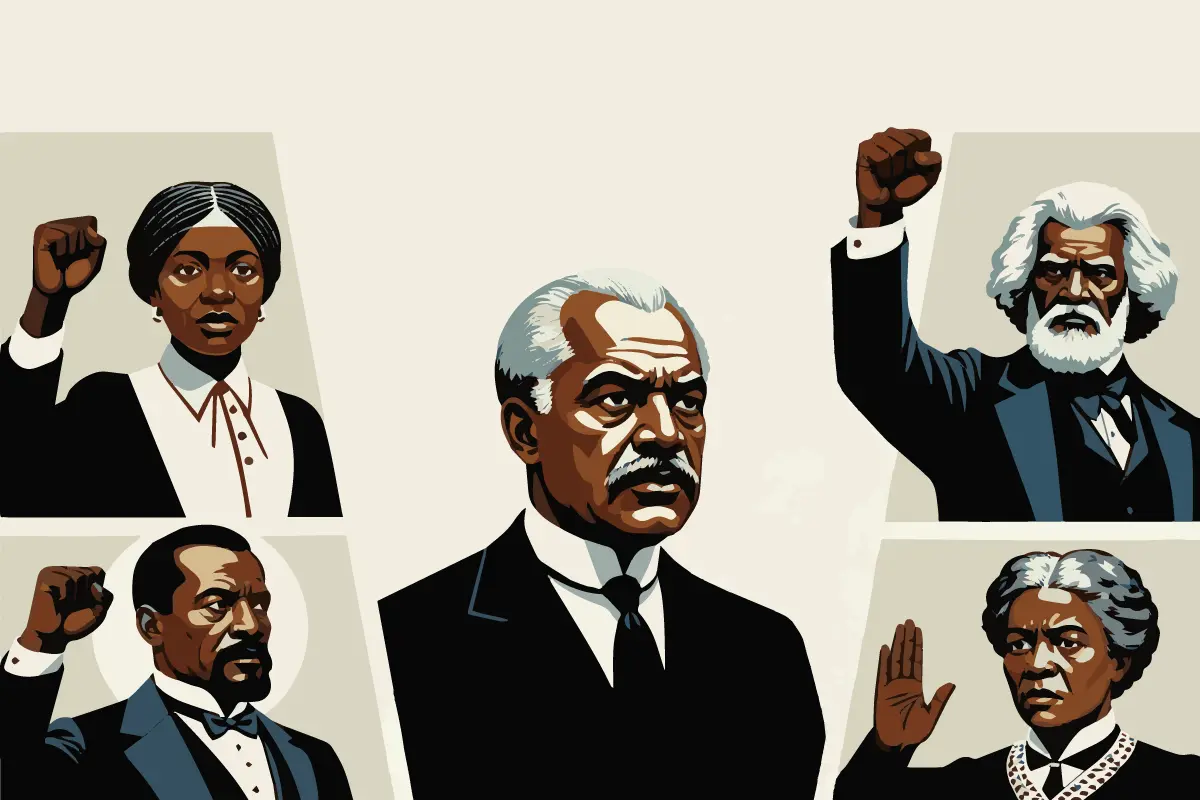
Black History Month Speeches Mini Unit by Various Authors (1900). Welcome to the Leveled Lit Classics Library (LLCL), a platform made by a teacher for teachers that makes timeless classical literature accessible to students and meets them at their reading level. Each title in the library has a comprehensive companion study guide and lesson plan designed for 1–2 days of instruction.
Black History Month Speeches Mini Unit can work across high school classrooms when teachers want compact primary-source texts for rhetorical analysis, historical context, and short written response. LLCL offers Original and Leveled paths into the same six-speech set so classes can stay aligned on argument, evidence, and discussion.
Teachers often want a short, discussion-ready speech set that still exposes students to serious argument, historical injustice, and multiple rhetorical voices without overwhelming them with a full-length unit.
Use the Original when students are ready for the strongest rhetorical texture and historical language; use the Leveled version when you want broader access to the arguments and a clearer path into annotation, discussion, and response writing.
| Version | Reading profile | Best classroom use |
|---|---|---|
| Original | FKGL 10.3 • 9,800 words | Best for stronger readers and full-text literary analysis. |
| Leveled | FKGL 7.2 • 7,400 words | Best for accessibility, differentiation, and shared whole-class pacing. |
Students need enough context to understand the speakers’ urgency, audience, and historical moment without turning the unit into all background and no reading.
Because this is a six-speech set, students also need help comparing rhetorical moves across texts instead of treating each speech in isolation.
Annotation routines and repeated discussion structures make the mini-unit much stronger than a one-speech-at-a-time approach.
This mini-unit addresses racism, slavery, disenfranchisement, violence, and systemic injustice directly. It is most valuable when teachers frame the speeches historically and rhetorically, not as detached inspirational excerpts.

Need a same-grade-band free option? The Legend of Sleepy Hollow is a useful companion title for planning pacing and support.
It gives teachers a compact, discussion-ready set of speeches that support rhetoric, historical argument, and cross-text comparison in a short instructional window.
The Leveled version helps students stay with the claims, evidence, and rhetorical purpose across the set when original-language density would otherwise slow the whole unit.
It can work in both, but it is especially strong in ELA when teachers emphasize rhetoric, audience, claims, evidence, and comparison across multiple speakers.